Movement that flows like nothing else
Gyrokinesis® (pronounced gyro-kih-nee-sis) is a holistic movement method that addresses the entire body through rhythmic, flowing exercises. Developed by Juliu Horvath — the same dancer and innovator behind the Gyrotonic Method — Gyrokinesis brings the same three-dimensional, spine-centered philosophy to a mat-based format that requires no specialized equipment.
Often described as a fusion of yoga, Tai Chi, dance, and swimming, Gyrokinesis emphasizes fluid, circular motions rather than static poses. Where yoga holds a position and breathes, Gyrokinesis moves through positions in a continuous, rhythmic flow. The result feels like a moving meditation — deeply physical, deeply calming, and qualitatively different from anything else in the fitness landscape.
At McKinney Movement Center in McKinney, TX, we offer Gyrokinesis as a weekly group class on Wednesday evenings at 6:30pm. It's one of the most distinctive classes we offer — and one of the most consistently loved by clients who discover it.
How the method works
Gyrokinesis is built around three interconnected principles that distinguish it from conventional mat exercise or yoga.
Every movement originates from the spine. Each class takes the spine through its seven natural directions — forward (arch), backward (curl), left and right side arches, left and right twists, and circular undulations. This creates a complete mobilization of the entire vertebral column in every session.
Unlike yoga where poses are held, Gyrokinesis is continuous. Movements flow seamlessly into one another, creating a dance-like quality. This continuity builds cardiovascular fitness and body coordination simultaneously with strength and flexibility.
Specific breathing patterns are paired with each movement to stimulate the nervous system, open energy pathways, and oxygenate the blood. The breath is not an afterthought — it drives the movement and creates the meditative quality of the practice.
A typical Gyrokinesis class at MMC
A Gyrokinesis session at McKinney Movement Center runs 60–75 minutes and follows a specific progression designed to systematically open and mobilize the entire body. Here's how a Wednesday evening class unfolds.
Class begins with a grounding sequence that draws attention inward and prepares the nervous system for movement. This isn't a conventional warm-up — it's a deliberate process of arriving in your body and establishing the breath-movement connection that defines the practice.
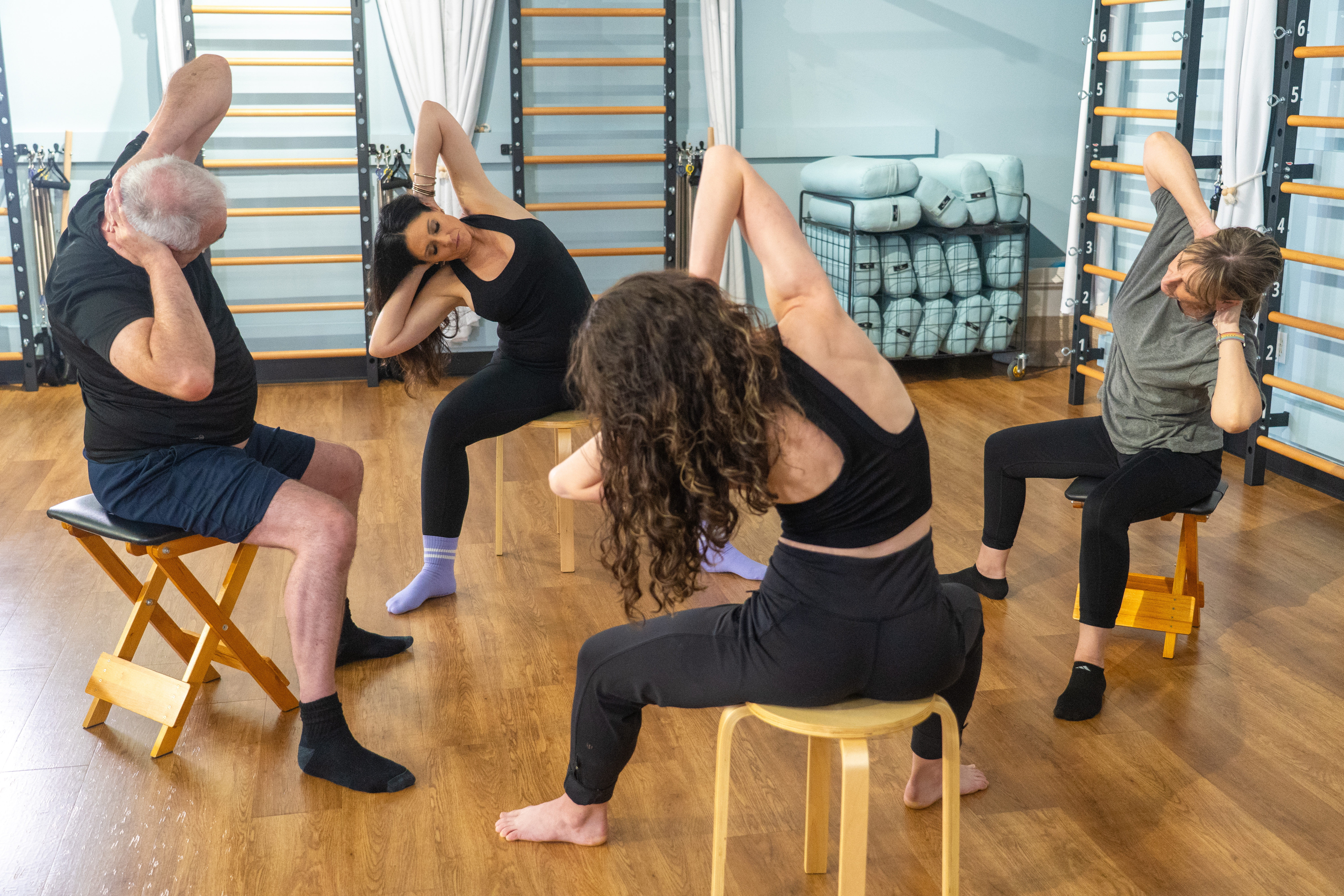
Seated on a low stool, we work through the seven spinal directions — arching, curling, side-bending, rotating, and circling. This is the heart of the Gyrokinesis method. The stool provides just enough support to allow deep, free movement of the spine without restriction.
Moving to the mat, we progress into more complex exercises targeting the hips, legs, and abdominals. Floor work in Gyrokinesis is dynamic — rolling, spiraling, and flowing — rather than static holds. This section builds significant core strength and hip mobility.
The session always closes standing — integrating balance work, agility, and uprightness with the strength and openness built throughout the class. You'll leave standing taller than you came in. Most clients describe feeling lighter, more spacious in their joints, and unusually clear-headed.
What regular Gyrokinesis does for you
Taking the spine through all seven natural directions in every session builds the kind of spinal mobility that most people lose as they age. Clients with chronic stiffness or back pain often notice significant improvement within a few weeks of consistent practice.
The circular, flowing movements increase range of motion without the jarring or compression of high-impact training. Gyrokinesis is one of the few practices that actively builds joint health rather than just tolerating it.
The continuous, internally-driven movement of Gyrokinesis builds deep core strength without conventional crunches or planks. The core engagement required to flow through the sequences is constant and deeply effective.
The rhythmic, meditative quality of the practice actively engages the parasympathetic nervous system. Most practitioners leave class feeling calm, clear-headed, and energized simultaneously — a combination that's genuinely unusual in the fitness world.
Because Gyrokinesis relies entirely on internal resistance and the body's own weight, it develops exceptional proprioception — your sense of where your body is in space. This translates to better coordination, balance, and efficiency in all movement.
Understanding both methods
Gyrokinesis and Gyrotonic are sister practices sharing the same founder, the same philosophy, and the same movement principles. The difference is simple — equipment.
Uses only a stool and a mat. All resistance comes from within — your own body weight, breath, and proprioceptive awareness. Can be practiced in a group class format. Wednesday evenings at 6:30pm at MMC. An excellent introduction to the Gyrotonic system and a powerful standalone practice.
Uses the Pulley Tower, Gyrotoner, and Jumping-Stretching Board — specialized wooden apparatus designed by Juliu Horvath. The equipment provides smooth, constant resistance that supports the body while guiding movement. Private and semi-private sessions only at MMC.
Many clients begin with Gyrokinesis group classes and transition to Gyrotonic private sessions as their understanding of the method deepens. Others maintain both long-term. Your instructor can help you find the right balance.