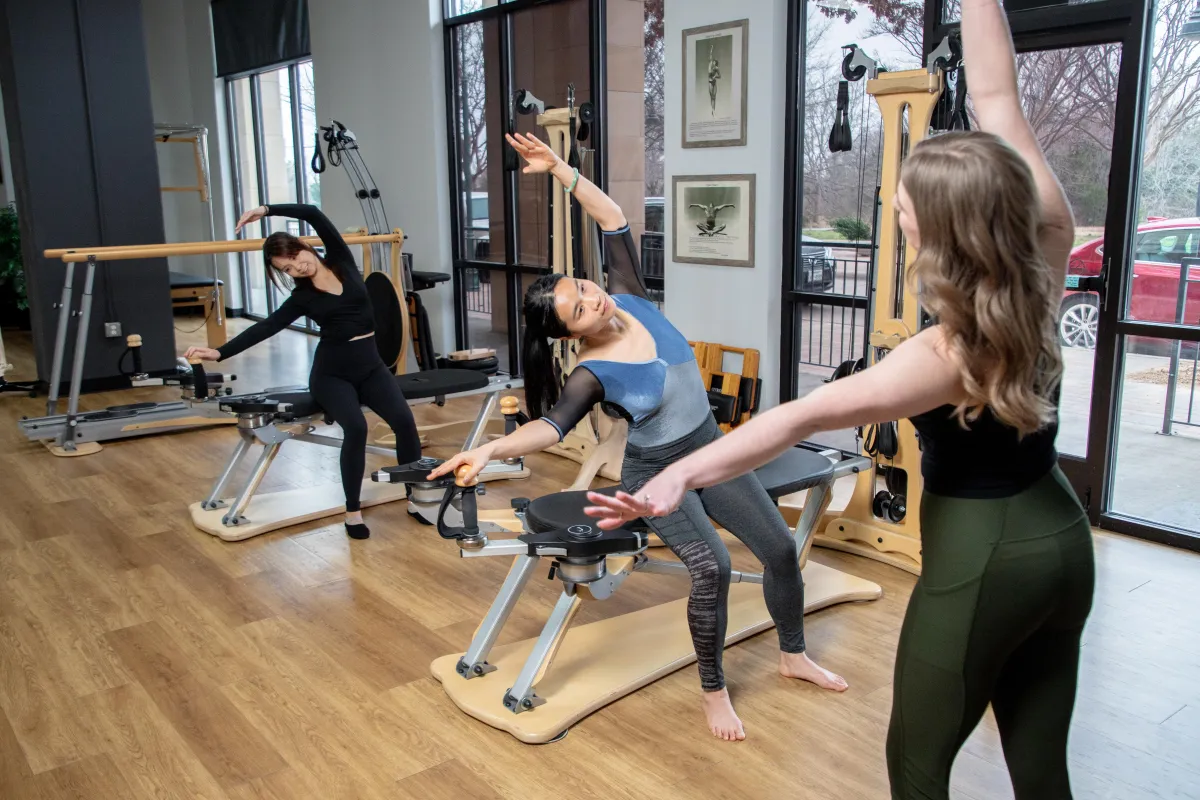
Movement that feels like nothing else
The Gyrotonic® Method is a unique movement system that incorporates principles from yoga, dance, gymnastics, swimming, and Tai Chi. Rather than training in the linear patterns of conventional gym equipment, Gyrotonic emphasizes three-dimensional, circular movements that flow together in a continuous, rhythmic sequence.
Clients who try their first Gyrotonic session at McKinney Movement Center often describe it as feeling like swimming, dancing, and yoga simultaneously — but with a strength and precision that surprises them. You'll leave a session feeling longer, taller, and more connected, with a freedom in your joints that's genuinely hard to find anywhere else.
Unlike machines that restrict you to a single plane of motion, the Gyrotonic Pulley Tower mirrors the natural curves and spirals of the human body. The resistance is smooth and constant — no jarring stops, no compression. Just your body moving the way it was designed to move.
From injury to innovation
The Gyrotonic Method was developed by Juliu Horvath, a professional dancer from Romania. After suffering debilitating injuries to his Achilles tendon and spine that ended his dancing career, Horvath spent years in intensive self-study and meditation in the Virgin Islands.
He began developing what he initially called "Yoga for Dancers" — a movement system designed not just for physical rehabilitation, but for the holistic rejuvenation of the nervous system and energy pathways. That system eventually evolved into what is now the Gyrotonic Expansion System, practiced by hundreds of thousands of people worldwide and used by elite athletes, dancers, and rehabilitation specialists.
What makes the origin story relevant is this: the method was built from the inside of an injured body trying to heal itself. That gives it a depth and sensitivity that systems designed by healthy people in laboratories often lack. Gyrotonic works because it was created out of necessity, by someone who understood what a broken body needs to find its way back.
"I want to create a body that is like a mountain — stable, yet like water — fluid."
How Gyrotonic actually works
The Gyrotonic Method is built on several interconnected principles that distinguish it from conventional exercise. Understanding these principles helps explain why the method produces changes that feel qualitatively different from anything else.
Gyrotonic movements are multi-directional, mimicking the natural architecture of our joints and fascia. Where conventional training moves up, down, or side to side, Gyrotonic moves through arcs and spirals — the shapes the body actually wants to make.
The spine is treated as a living, breathing structure. Every session focuses on articulating each vertebra through undulating patterns that create space and decompression. Clients with chronic back pain often notice significant relief after just a few sessions.
Every movement is synchronized with a specific breathing pattern. This stimulates the internal organs, maintains a calm and focused nervous system, and creates a meditative quality that makes Gyrotonic feel unlike any other form of training.
There are no static holds in Gyrotonic. One movement flows seamlessly into the next, creating a cardiovascular benefit while simultaneously building strength and flexibility. The continuous nature of the work is what gives it its unique feeling of flow.
Specialized equipment unlike anything else
The Gyrotonic Method uses handcrafted wooden apparatus designed by Juliu Horvath himself. Each piece is engineered to unlock specific types of movement while providing smooth, constant resistance without compression or jarring. At McKinney Movement Center we offer sessions on the full range of Gyrotonic apparatus.
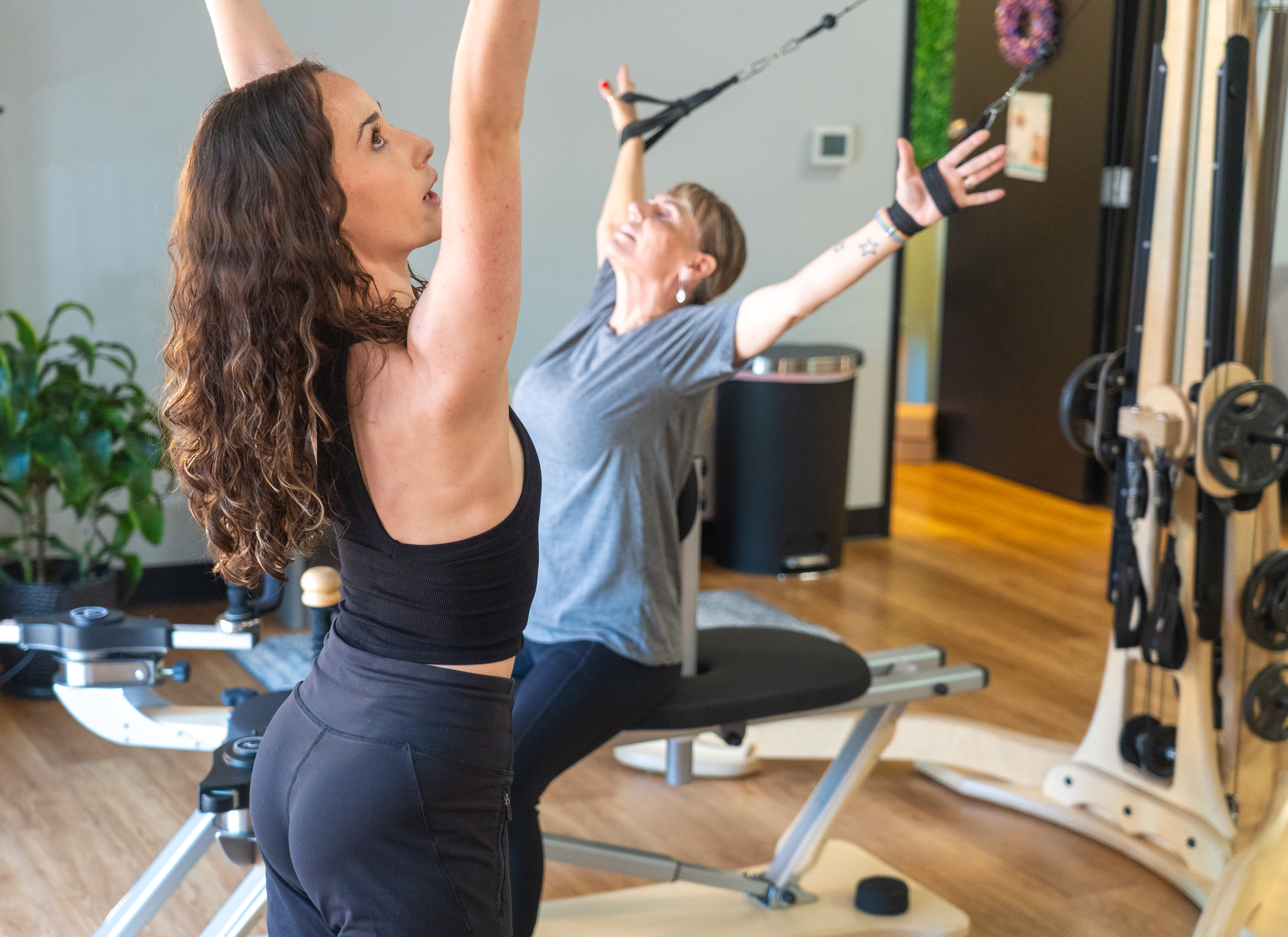
The heart of the Gyrotonic system. A weighted cable-and-handle machine that acts as a partner — supporting your body's weight while providing resistance. It allows the spine to move through its full range, arching, curling, and spiraling, without the compression of gravity. Most sessions begin and center on the Tower.
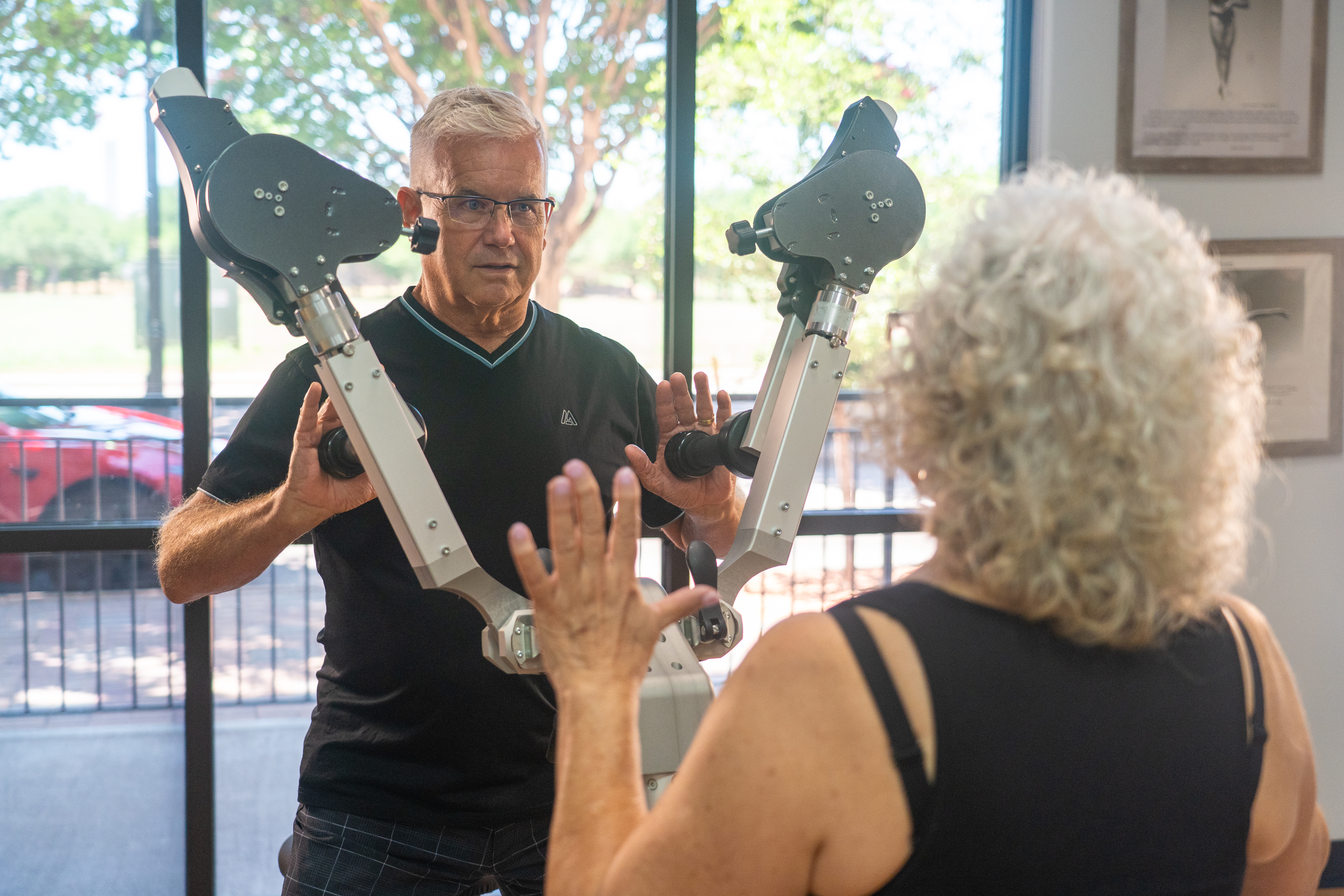
The specialist for shoulder, hip, and thoracic spine mobility. With independent, adjustable handles and rotating mechanisms, the Gyrotoner coordinates the movement of your limbs with your spine. Particularly effective for desk-bound posture, shoulder issues, and overhead athletic demands like swimming and tennis.
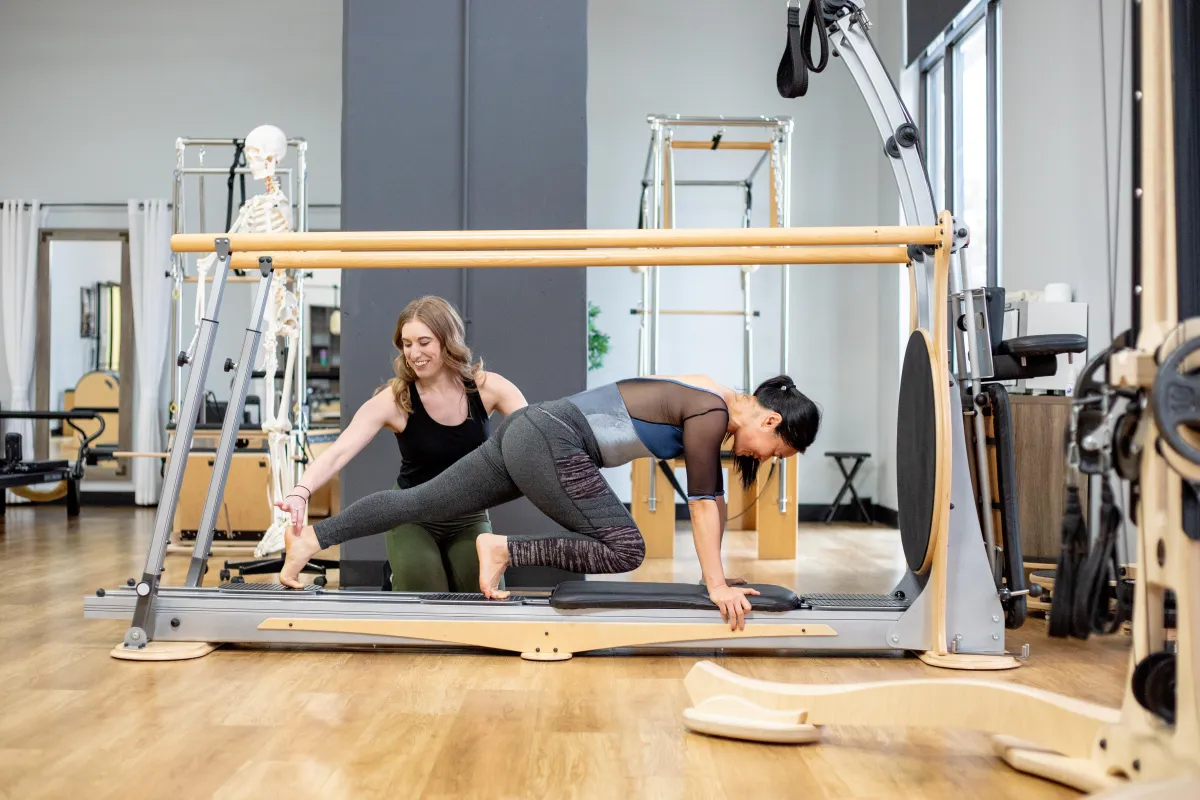
Don't let the name mislead — this isn't about high-impact bouncing. An ergonomic gliding platform that allows functional leg work in a horizontal plane, building explosive power and flexibility while keeping the spine and pelvis fully supported. A favorite for athletes and rehab clients alike.
The benefits of regular practice
The circular, three-dimensional movements create traction and space between vertebrae. Many clients with chronic back pain find lasting relief through consistent Gyrotonic practice.
Increases range of motion without the jarring or compression of high-impact training. Gyrotonic is one of the few systems that actively builds joint health rather than just working around it.
Improves rotational power, hip mobility, shoulder mechanics, and body coordination. Used by professional athletes across sports — particularly golfers, swimmers, and baseball players.
The rhythmic, meditative quality of Gyrotonic work leaves most practitioners feeling calm, clear-headed, and energized after sessions. The synchronized breathing actively engages the parasympathetic nervous system.
The smooth, supported resistance of the Pulley Tower makes Gyrotonic ideal for rehabilitation from injury or surgery. Movement can be introduced even when loading through conventional apparatus would be too aggressive.
Builds a strong core and long, lean muscles that translate directly to everyday movement and athletic activity. Strength built in the full range of motion, not just the positions a machine allows.
Understanding both methods
Gyrotonic and Gyrokinesis are sister practices developed by the same founder using the same principles. The key difference is the apparatus — or lack of it.
Uses the Pulley Tower, Gyrotoner, Jumping-Stretching Board, and other specialized apparatus. The equipment provides constant, smooth resistance that supports the body while guiding movement. Private and semi-private sessions only — the equipment requires individual instructor attention to use safely and effectively.
The same movement principles without equipment — just a stool and a mat. Gyrokinesis builds internal resistance and proprioception. It can be practiced in a group class format and is an excellent introduction to the method or complement to Gyrotonic sessions. We offer Gyrokinesis classes Wednesday evenings at MMC.
Many clients practice both — Gyrotonic private sessions for depth and personalization, and Gyrokinesis group classes to maintain the movement patterns and build community. Your instructor can help you find the right combination for your goals.